
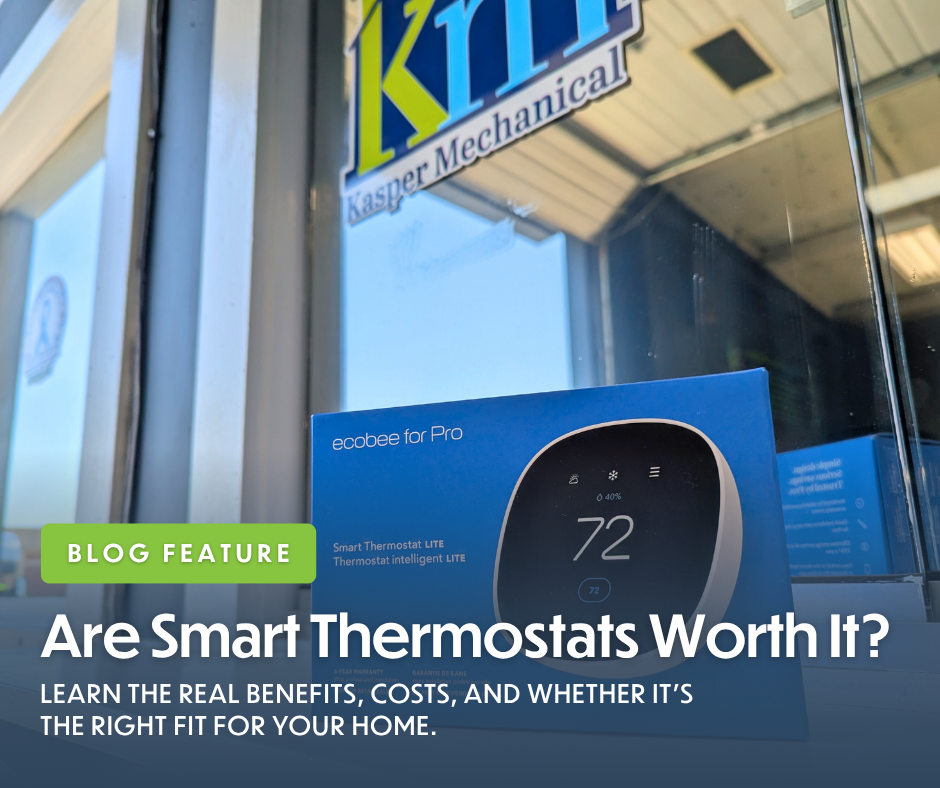
If you’ve ever adjusted your thermostat from your phone or seen ads promising lower energy bills, you’ve probably wondered:
Are smart thermostats worth it?
For many homeowners the answer is yes — but it depends on your home, your HVAC system, and how you use it.
In this guide, we’ll break down:
- How smart thermostats work
- The real cost savings
- Pros and cons
- Who benefits most
- When it makes sense to upgrade
Let’s take a closer look.
What Is a Smart Thermostat?
A smart thermostat is an upgraded thermostat that connects to Wi-Fi and allows you to control your heating and cooling system remotely through a smartphone, tablet, or computer.
Unlike traditional thermostats, smart models can:
- Learn your schedule
- Automatically adjust temperatures
- Track energy usage
- Integrate with smart home systems
- Provide maintenance alerts
They go beyond simple temperature control — they help optimize HVAC efficiency.
How Smart Thermostats Save Money
One of the biggest selling points is energy savings.
Smart thermostats reduce unnecessary heating and cooling by automatically adjusting temperatures when:
- You’re at work
- You’re sleeping
- You’re on vacation
- No one is home
According to energy studies, homeowners can save 10–15% on heating and cooling costs with proper use.
In Virginia, where summers are humid and cooling systems run for months, those savings can add up quickly.
Smart Thermostat Benefits
Let’s break down the key advantages.
1. Energy Efficiency
An energy-efficient thermostat prevents your HVAC system from running longer than necessary. Over time, this reduces wear and tear on equipment.
Lower runtime = lower utility bills + extended system lifespan.
2. Remote Control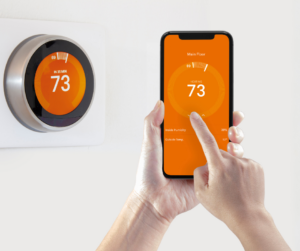
Forgot to adjust the AC before leaving town?
With a smart thermostat, you can:
- Adjust temperature from anywhere
- Turn the system on before arriving home
- Monitor indoor conditions in real time
This level of control is especially helpful during Virginia’s unpredictable weather swings.
3. Learning Technology
Some smart thermostats learn your habits and automatically create schedules based on your routine.
For example:
- Lower cooling during work hours
- Raise cooling before you return home
- Adjust settings overnight
This removes the guesswork from energy management.
4. Usage Reports & Insights
Many models provide monthly energy reports showing:
- How often your system runs
- Efficiency trends
- Tips for reducing usage
This transparency helps homeowners make informed decisions about HVAC efficiency.
5. Smart Home Integration
Smart thermostats can connect with:
- Voice assistants
- Security systems
- Smart lighting
- Home automation platforms
This allows for seamless climate control integration within your home.
How Much Do Smart Thermostats Cost?
Cost varies depending on brand and features.
Typical price range:
- Basic smart models: $100–$150
- Advanced learning models: $200–$300+
Installation costs vary depending on wiring compatibility and system complexity.
While there’s an upfront investment, energy savings often help offset the cost within 1–2 years.
Are Smart Thermostats Worth It for Older HVAC Systems?
If your HVAC system is 15+ years old, upgrading the thermostat can still help improve efficiency — but it won’t fix underlying mechanical issues.
Smart thermostats work best when:
- The HVAC system is properly maintained
- Airflow is balanced
- Ductwork is sealed
If your system already struggles to cool your home, thermostat upgrades alone won’t solve comfort problems.
Smart Thermostat vs Programmable Thermostat
Homeowners often ask about the difference.
Programmable Thermostat:
- Set schedules manually
- No Wi-Fi connectivity
- Lower upfront cost
Smart Thermostat:
- Wi-Fi enabled
- Remote control
- Learning capabilities
- Energy tracking
If you’re disciplined about programming a traditional thermostat, savings may be similar. However, smart models offer convenience and automation most homeowners actually use.
When a Smart Thermostat Makes the Most Sense
You’ll benefit most if:
- You’re frequently away from home
- Your schedule varies
- You travel often
- You forget to adjust temperature manually
- You want to monitor energy usage
Virginia homeowners who experience long cooling seasons often see noticeable summer savings.
Situations Where It May Not Be Necessary
A smart thermostat may not be essential if:
- You’re home all day with consistent temperature preferences
- Your HVAC system is nearing replacement
- You rarely adjust your thermostat
In these cases, upgrading may provide convenience — but limited cost savings.
Can Smart Thermostats Extend HVAC Lifespan?
Yes — indirectly.
Because they reduce unnecessary runtime, they:
- Lower strain on components
- Reduce overheating
- Improve cycling efficiency
Over time, this can contribute to fewer repairs and longer system life.
Will a Smart Thermostat Fix High Energy Bills?
Not always.
High energy bills may also be caused by:
- Poor insulation
- Duct leaks
- Aging equipment
- Dirty coils
- Low refrigerant
A smart thermostat improves efficiency — but it cannot compensate for mechanical issues.
That’s why pairing thermostat upgrades with regular HVAC maintenance is important.
Smart Thermostat Installation: DIY or Professional?
Some homeowners install smart thermostats themselves. 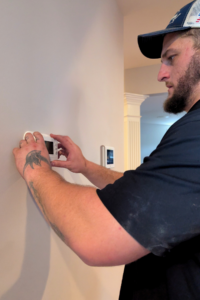
However, professional installation ensures:
- Proper wiring configuration
- Compatibility with your HVAC system
- Correct setup and calibration
- Warranty protection
Incorrect wiring can damage your HVAC system.
If you’re unsure about compatibility, professional installation is strongly recommended.
Virginia Climate Considerations
In Stafford, Fredericksburg, and surrounding areas, humidity control is critical.
Smart thermostats can help manage:
- Cooling cycles
- Temperature consistency
- System efficiency during heat waves
Because air conditioning runs heavily in summer, optimizing performance matters.
So… Are Smart Thermostats Worth It?
For most homeowners, yes.
They provide:
✔ Lower energy bills
✔ Convenience and control
✔ Improved efficiency
✔ Better system performance
✔ Insight into energy usage
While not a magic solution, they are a smart upgrade for homes looking to reduce cooling costs and modernize HVAC control.
Final Thoughts
A smart thermostat won’t replace proper HVAC maintenance — but it can enhance it.
If your system is in good condition and you want better energy control, upgrading your thermostat is often a worthwhile investment.
If you’re unsure whether your current system is compatible, a professional evaluation can help you decide.
Ready to Upgrade Your Thermostat?
If you’re considering a smart thermostat installation in Stafford, Fredericksburg, or Northern Virginia, Kasper Mechanical Heating and Air Conditioning can help.
Our licensed technicians can:
- Assess system compatibility
- Recommend the right model
- Professionally install and configure it
- Ensure optimal performance
Contact us today to schedule your thermostat upgrade and start maximizing your HVAC efficiency.